 EU | EN | EU | EN | EU | EN |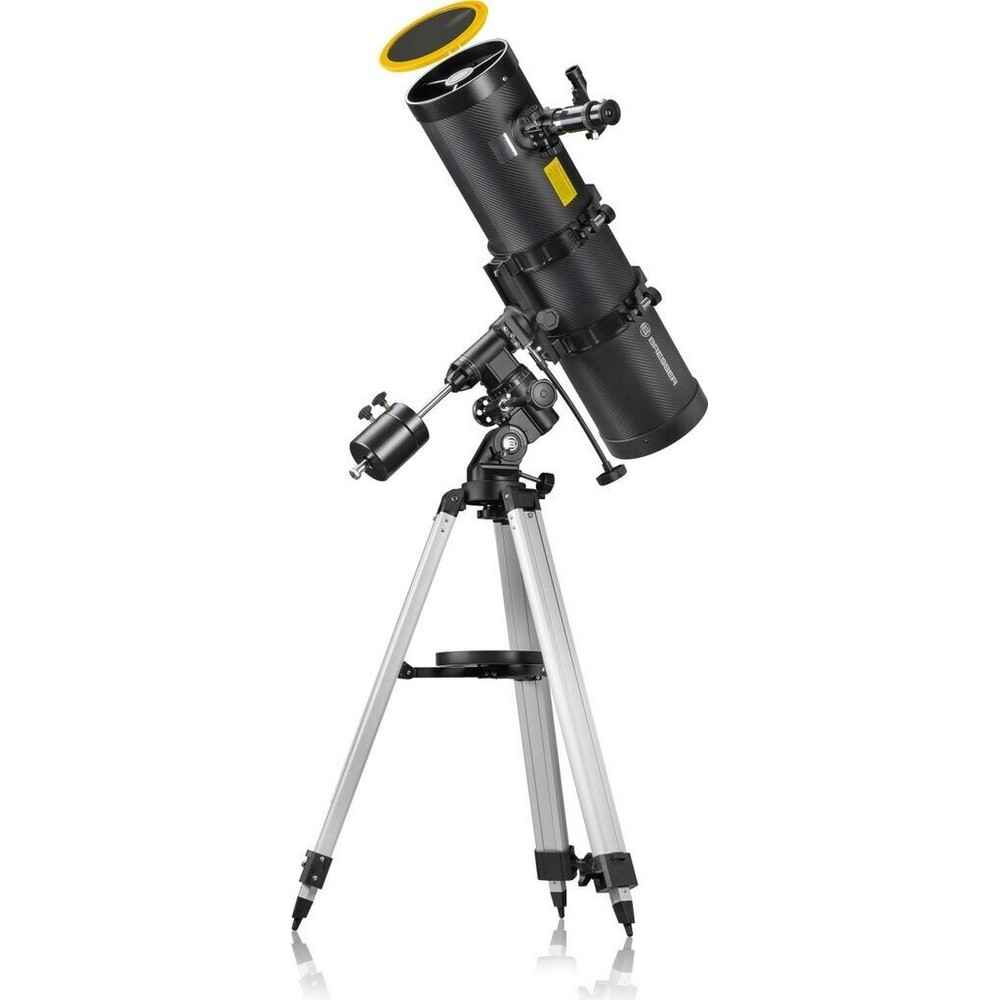
Bresser Pollux 150/1400 EQ3
BeyTechproduct.aboutProduct
product.sku
Frid-BresserPollux
product.category
Telescopes
product.brand
Bresser
product.supplier
Beyston
product.weight
10kg
home.listPrice: €445.28
20 product.inStock
discountCoupon.discountCoupons
product.otherOffersFromSellersOnBeyston
product.description
Bresser Pollux 150/1400 EQ3 Astronomical Telescope
The Bresser Pollux 150/1400 EQ3 is a reflector telescope designed for astronomy enthusiasts seeking detailed views of celestial objects. Featuring a large 150 mm aperture and a sturdy EQ3 equatorial mount, this telescope delivers bright and sharp images of the Moon, planets, star clusters, and deep‑sky targets. Its robust construction and precise manual tracking make it a great choice for both beginners and intermediate observers.
Features
- Large aperture: 150 mm diameter reflecting mirror gathers ample light for clear views of faint objects.
- Long focal length: 1400 mm focal length provides higher magnification potential for detailed observation.
- Equatorial mount (EQ3): Stable, adjustable mount with slow‑motion controls for smooth manual tracking of celestial objects.
- Included eyepieces: Multiple eyepieces allow a range of magnifications for different targets.
- Finder scope: Easy‑to‑use finder helps locate objects in the night sky.
Benefits
- Excellent performance on lunar and planetary observations with bright, detailed images.
- Suitable for exploring deep‑sky objects such as nebulae and star clusters.
- Manual equatorial mount makes it easier to follow objects as Earth rotates.
- Ideal balance between aperture size, performance, and affordability.
Package Contents: Optical tube, EQ3 equatorial mount with tripod, eyepieces, finder scope, diagonal mirror, accessory tray, and user manual.
Technical Specifications
- Optical design: Reflector telescope
- Aperture: 150 mm
- Focal length: 1400 mm
- Mount type: EQ3 equatorial mount
- Included eyepieces: Multiple eyepieces for varied magnifications
- Finder scope: Included for easier targeting
Ideal For
- Beginner and intermediate astronomy enthusiasts
- Lunar and planetary observation
- Deep‑sky object viewing
- Manual tracking and astrophotography practice
Keywords
Bresser Pollux 150/1400 EQ3, reflector telescope, equatorial mount, astronomical telescope, deep sky observation, lunar and planetary viewing, beginner telescope.